

Not long ago, workplace productivity was closely tied to visibility. If employees were online, responding instantly, or sitting in meetings all day, it was often viewed as proof of engagement. That mindset is changing. As businesses become more distributed and teams work across locations and time zones, many organizations are discovering that constant availability does not always lead to better results.
An asynchronous work culture shifts the focus from presence to performance. Instead of expecting everyone to work simultaneously, employees have the flexibility to complete tasks, collaborate, and communicate on schedules that support deep work and better decision-making. When implemented correctly, this approach can improve team productivity, reduce workplace stress, and create a more sustainable remote work culture.
Understanding the Foundation of Asynchronous Work Culture

At its core, an asynchronous work culture allows people to contribute without needing immediate responses from colleagues. Work moves forward through documented information, structured communication, and shared accountability rather than real-time interaction.
Successful asynchronous communication depends on a few essential principles:
- Radical transparency across teams
- Thorough documentation practices
- High levels of autonomy and trust
- Context-rich communication
- Intentional use of real-time collaboration
These elements work together to create a workplace where employees can stay productive regardless of schedules or locations.
Why Documentation Becomes the Backbone of Success
One of the biggest differences between average and high-performing distributed teams is how they manage information.
In traditional workplaces, employees often rely on quick conversations or spontaneous meetings to gather context. In an asynchronous environment, those interactions cannot always happen. Information must be available when people need it.
That is why successful organizations adopt an over-documentation mindset. Important decisions, project updates, workflows, and company knowledge are stored in centralized and searchable systems. Employees can find answers independently instead of waiting hours for a colleague to respond.
This documentation-first culture also improves knowledge sharing. New employees can onboard faster, project histories remain accessible, and fewer details get lost in chat conversations.
High Autonomy and Trust Drive Better Results

Many leaders struggle with asynchronous work because it requires a different management style.
Traditional management often emphasizes activity tracking. Managers monitor attendance, online status, or hours worked. An asynchronous work culture challenges this approach by prioritizing outcomes over visibility.
Employees are trusted to manage their schedules and responsibilities while remaining accountable for results. This autonomy often leads to higher engagement because people feel ownership over their work.
Organizations that successfully embrace workplace flexibility understand that trust is not simply a benefit of asynchronous work. It is a requirement. Without trust, managers may resort to excessive monitoring, creating friction that undermines the entire model.
The Importance of Clear Communication Expectations
One common misconception is that asynchronous work means less communication. In reality, it requires better communication.
Successful teams establish explicit communication charters that define expectations. Employees know where to communicate, how to communicate, and when responses are expected.
For example, a team might agree that:
- Project management updates should be reviewed within one business day.
- Chat messages require responses within four hours.
- Urgent issues should follow a separate escalation process.
These guidelines eliminate uncertainty and reduce the pressure to remain constantly connected.
When expectations are documented, employees gain greater control over their work-life balance without sacrificing collaboration.
Using the Right Tools for Asynchronous Collaboration
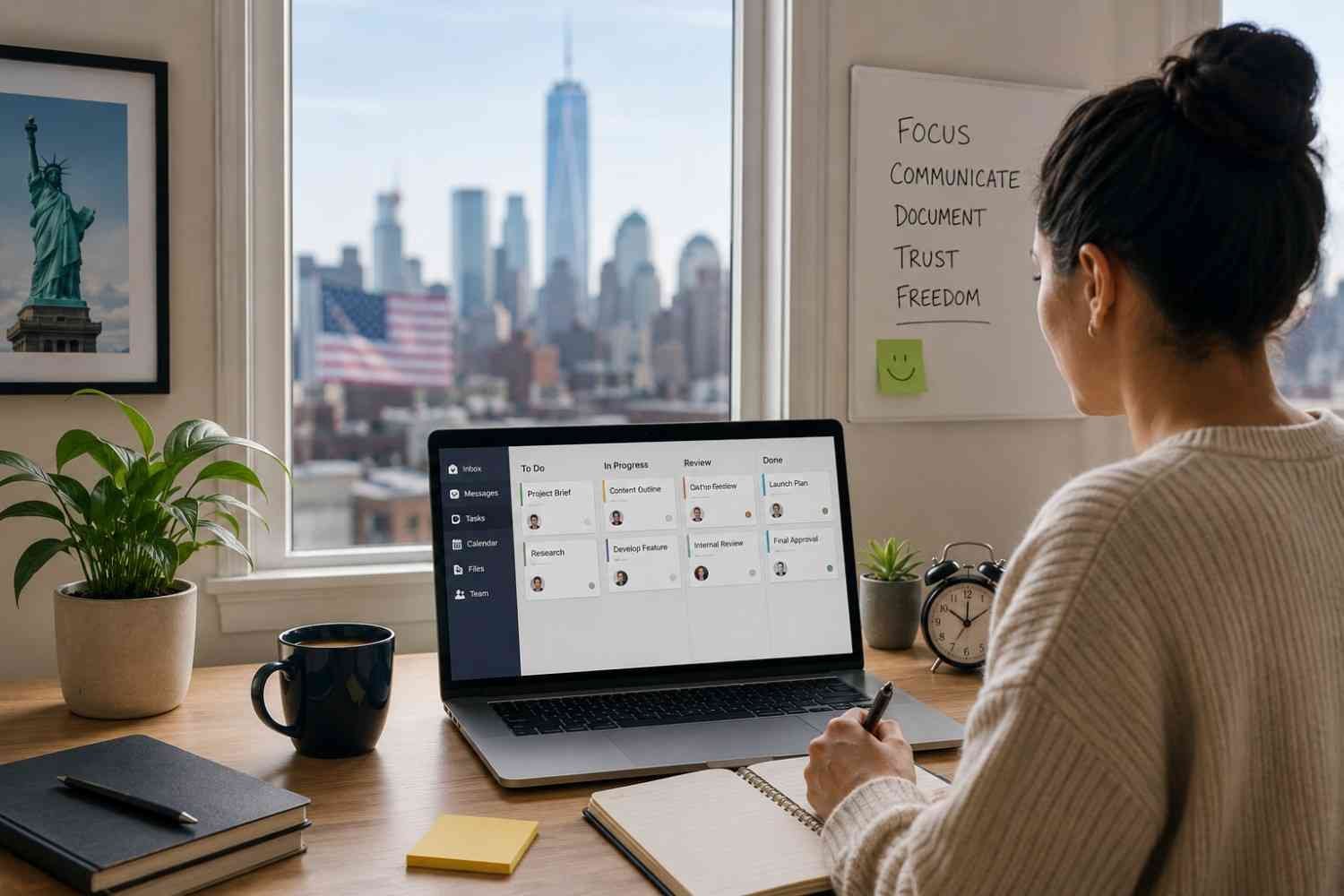
Technology plays an important role in supporting remote collaboration, but tools alone do not create a successful asynchronous work culture.
High-performing teams move beyond chaotic group chats and prioritize systems that preserve context. Project management platforms, shared documentation spaces, recorded video updates, and detailed project briefs help employees understand what is happening without requiring multiple meetings.
The goal is to create a digital workplace where information remains accessible long after it is shared.
Interestingly, many businesses that successfully implement influencer business strategies apply a similar principle. They rely on documented processes, scalable communication, and clear workflows rather than depending on constant real-time coordination. The same mindset helps asynchronous teams operate more efficiently.
The Benefits Driving Adoption Across Modern Workplaces
Organizations continue adopting asynchronous work because the advantages extend beyond flexibility.
Deep Work and Greater Productivity
Frequent interruptions can make focused work difficult. Constant notifications, status meetings, and unexpected calls often break concentration.
An asynchronous environment reduces these disruptions and allows employees to dedicate larger blocks of time to meaningful work. Tasks such as writing, engineering, research, and strategic planning often benefit significantly from uninterrupted focus.
Access to Global Talent
Distributed teams are no longer restricted by geography. Companies can hire skilled professionals based on expertise rather than location.
This expanded talent pool gives organizations greater flexibility while allowing employees to contribute from environments where they perform best.
Reduced Meeting Fatigue
Many organizations spend substantial time in meetings that could easily be replaced by written updates or recorded explanations.
Asynchronous communication reduces unnecessary meetings and enables employees to consume information when it fits their schedules. The result is more productive working hours and less mental exhaustion.
Greater Inclusivity
Not everyone communicates best in live discussions. Introverts, thoughtful processors, and individuals working across time zones often contribute more effectively when given time to reflect before responding.
An asynchronous work culture creates cognitive equity by allowing employees to participate without the pressure of immediate reactions.
Overcoming Common Challenges

Despite its benefits, asynchronous work presents challenges that organizations must address intentionally.
Preventing Employee Isolation
One risk of a remote work culture is reduced social interaction. Strong teams actively create opportunities for connection through virtual coffee chats, team discussions, mentorship programs, and occasional in-person gatherings.
These interactions strengthen relationships without disrupting daily productivity.
Avoiding Project Stalls
Projects can slow down when employees wait for approvals or instructions.
Successful teams encourage a default-to-action mindset. Employees use available documentation and established guidelines to make informed decisions rather than waiting indefinitely for direction.
Standardizing Context-Rich Communication
A common cause of inefficiency is incomplete communication.
Instead of sending messages like “Can you help with this?” successful teams provide background information, relevant links, project context, specific questions, and deadlines within a single message.
This approach minimizes back-and-forth conversations and improves workplace communication across distributed teams.
FAQs: What Makes an Asynchronous Work Culture Successful in Today’s Workplace
1. What is an asynchronous work culture?
An asynchronous work culture allows employees to work and communicate without requiring everyone to be online at the same time. Collaboration happens through documented information, project management systems, and structured communication channels.
2. How is asynchronous work different from remote work?
Remote work refers to where employees work, while asynchronous work refers to how they collaborate. A remote team can still operate synchronously through constant meetings, whereas an asynchronous team relies less on real-time interaction.
3. Does asynchronous work eliminate meetings completely?
No. Successful organizations use an async-first approach rather than an async-only approach. Meetings remain valuable for brainstorming, relationship building, sensitive discussions, and complex decision-making.
4. What skills are important in an asynchronous workplace?
Strong written communication, self-management, accountability, documentation habits, and proactive decision-making are among the most important skills for success in an asynchronous environment.
Final Thoughts
A successful asynchronous work culture is not built around technology alone. It is built around trust, transparency, documentation, and intentional communication. Organizations that embrace these principles create environments where employees can focus on meaningful work rather than constant responsiveness. The result is often stronger productivity, better collaboration, and a healthier relationship with work itself. As workplaces continue evolving, the ability to operate effectively without depending on real-time presence is becoming less of a competitive advantage and more of a necessity.
The organizations that thrive will be those that learn to balance autonomy with accountability and flexibility with connection.