
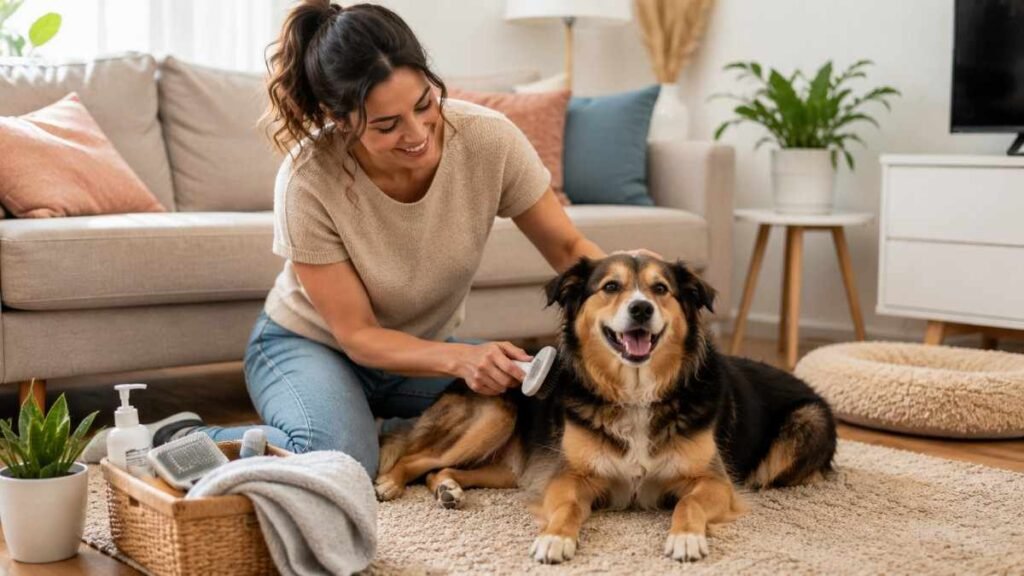
A cleaner couch, fewer fur tumbleweeds, and a dog who smells cuddle-ready can make everyday life feel lighter. These dog grooming tips and tricks are made for real homes, busy schedules, and pups who love muddy walks.
Key Takeaways
- Brush before every bath.
- Use coat-specific grooming tools.
- Trim nails slowly and safely.
- Keep FFF areas neat.
- Make grooming calm, not rushed.
Why Dog Grooming Tips And Tricks Matter
Dog grooming tips and tricks help your pup stay clean, comfortable, and easier to care for at home. Regular brushing, bathing, nail trimming, ear checks, and paw care prevent painful mats, reduce odor, control shedding, and reveal skin issues early.
Grooming Kit Basics
The right tools make at-home grooming feel less like a battle and more like a calm care routine. Keep everything nearby before you start, so your dog is not waiting.
Choose The Right Brush
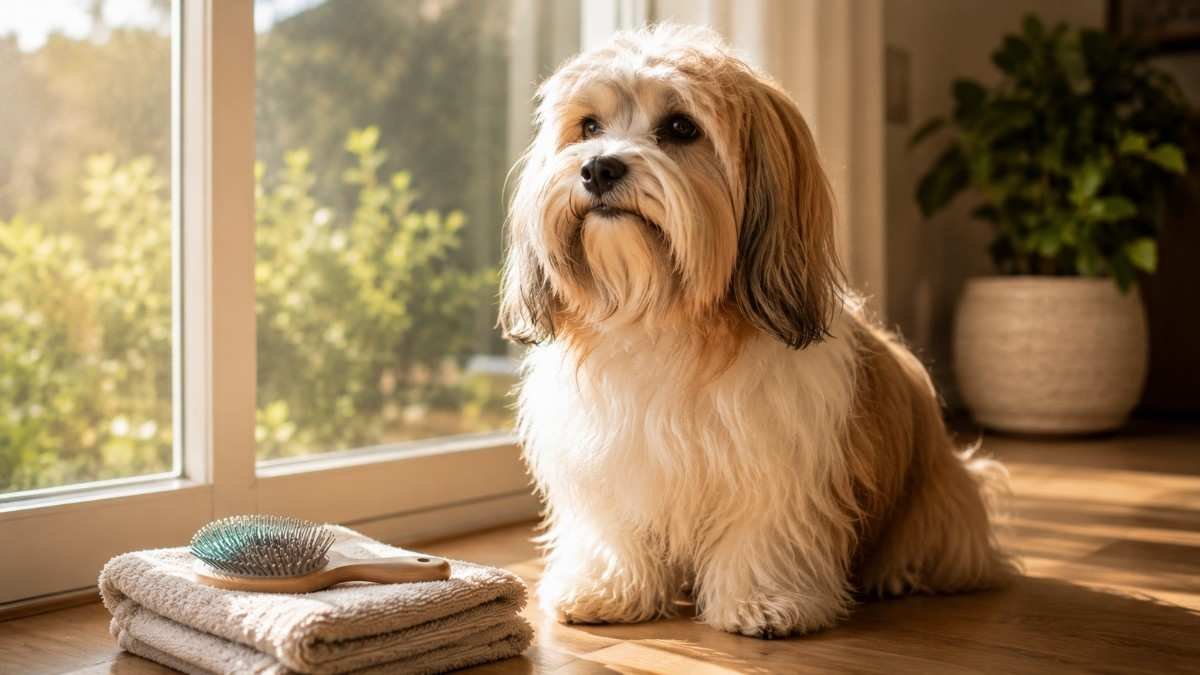
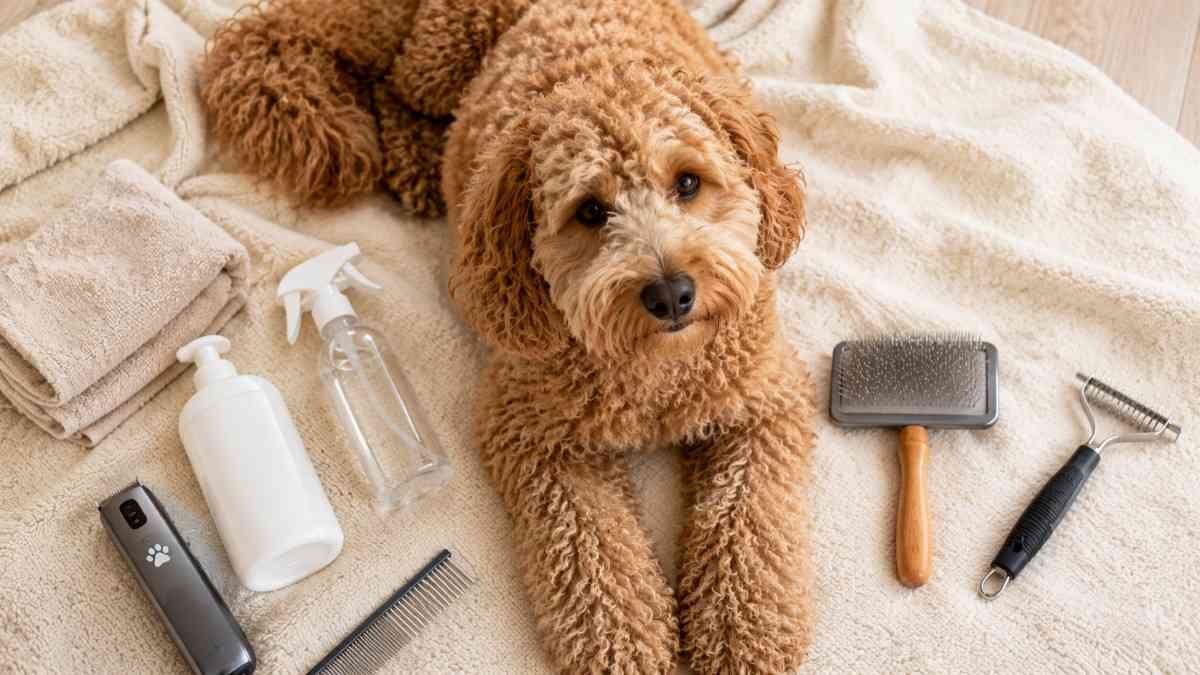
Short-coated dogs often need a rubber curry brush or grooming mitt. Long, silky, curly, and double coats need a slicker brush, pin brush, undercoat rake, and metal comb.
Always test a slicker brush on your own forearm first. If it scratches your skin, it is too harsh. Gentle pressure should reach the coat, not scrape skin.
Keep Bath Tools Simple
Use dog shampoo, a microfiber towel, a non-slip rubber mat, and lukewarm water. Human shampoo can irritate skin, so choose a canine-safe formula.
Professional groomers often dilute shampoo with water, usually around one part shampoo to four parts water. This helps it spread and rinse fully, reducing residue and itching.
Keep treats close, too. Tiny rewards after brushing, paw handling, or rinsing tell your dog that grooming predicts good things, not drama.
This simple routine also fits apartment living, road trips, rainy seasons, and busy family homes where quick, gentle daily pet care matters as much as a full groom.
Dog Grooming Tips And Tricks For Brushing
Brushing is the foundation of dog grooming tips and tricks because it prevents tangles before they become painful mats. It also spreads natural oils, lowers shedding in dogs, and helps you check skin.
Use The Tug And Pull Method
With a slicker brush, tap the coat and gently pull away instead of dragging the brush hard across the skin. Work in layers from the skin outward, especially on thick, curly, or double coats.
Surface brushing can look smooth while knots hide underneath. Part hair, brush a small section, then check with a metal comb.
Find Mats Early
Mats often form behind ears, under collars, in armpits, near tails, between back legs, and under harnesses. These spots rub and tighten quickly.
If your comb meets resistance, stop and part the hair. Work from outer edges inward with a dematting comb or fingers. Never cut tight mats with scissors because skin can be pulled into the mat.
Try A Detangler Trick
A light dog-safe detangler can help loosen knots without yanking. Some groomers use a tiny dusting of cornstarch on dry tangles for slip.
Move slowly and reward your dog often. One calm five-minute session beats a stressful one your pup avoids tomorrow.
For lifestyle-friendly maintenance, brush high-friction spots first on busy days. Even quick attention to ears, collar areas, and legs can stop small knots from becoming weekend problems.
Bathing And Drying Tips
Bathing works best after brushing because water tightens tangles. A good bath cleans the coat, protects skin, and keeps your dog steady.
Prep The Tub First
Place a rubber mat in the tub to stop slipping. Dogs feel safer with grip, and steady dogs are easier to wash.
Use lukewarm water and avoid spraying directly into the eyes, ears, or nose. Massage shampoo through the coat gently, then rinse until the water runs clear and the fur no longer feels slippery.
Dry Without New Tangles
After bathing, squeeze water with a microfiber towel instead of rubbing. Rubbing creates friction and causes fresh tangles.
Do not let curly or double coats air dry while damp underneath. Trapped moisture can irritate the skin and contribute to hot spots. Use a low dryer setting if your dog tolerates it.
Freshen Between Baths
Lifestyle grooming is not about bathing every few days. Between baths, wipe paws, brush loose hair, clean bedding, and use pet-safe coat wipes after muddy walks.
Over-bathing can dry skin, so let brushing and quick cleanups do most work.
Wash collars, harnesses, and dog bedding regularly as well. A clean coat will not stay fresh for long if your pup naps on a smelly bed right after bath time.
Nail Trimming Know-How
Nail care for dogs matters because long nails can change how a dog stands and walks. Go slowly and stay calm.
Find The Quick
On light-colored nails, the quick looks like a pink sensitive vein inside the nail. Trim a tiny bit at a time, parallel to the floor, until a small white oval appears.
Dark nails are trickier, so take even smaller trims. If your dog pulls away, pause and reward. Two relaxed nails beat four forced paws.
Keep Powder Ready
Always keep styptic powder nearby before clipping. If you trim too short, press powder on the nail to clot bleeding. Cornstarch can help.
Introduce nail tools slowly. Let your dog sniff the tool, touch it to the paw, then reward. Confidence builds through repetition.
A nail grinder can work well for dogs who dislike clippers, but introduce the sound first. Keep sessions short, and avoid heat buildup by touching each nail briefly.
Handling And Safety
Good grooming depends on trust. Before a full bath or trim, focus on FFF zones: face, feet, and fanny.

Start With FFF Prep
FFF means face, feet, and fanny. Tidying these areas before the bath can reduce standing time later and keep sensitive spots cleaner between appointments.
Wipe tear debris gently, trim only excess paw-pad hair if needed, and keep the sanitary area neat. Use blunt-tip tools and stop if your dog gets tense.
Hold Safely Near The Face
When trimming near the face, place your non-dominant hand gently under your dog’s jaw to keep their head steady.
Never rush around eyes, ears, whiskers, or lips. If your dog is nervous, book a groomer.
Take Breaks Often
Stress signs include freezing, yawning, lip licking, shaking, growling, hiding, or escape attempts. Pause before grooming feels scary.
Use treats, praise, and short sessions. A calm routine today creates an easier routine next month, which is the secret behind at-home grooming success.
For puppies and newly adopted dogs, practice handling without tools first. Touch one paw, lift one ear, stroke the tail area, reward, and stop while they still feel relaxed.
Frequently Asked Questions
1. What Are Common Dog Grooming Mistakes?
Common mistakes include bathing before brushing, using human shampoo, cutting mats with scissors, brushing only the surface, trimming nails too fast, and ignoring stress signals during dog grooming tips and tricks.
2. What Does FFF Mean In Dog Grooming?
FFF means face, feet, and fanny. Groomers use it for light maintenance that tidies sensitive areas and keeps dogs cleaner between appointments.
3. What Are The 7 Basic Personal Grooming Tips?
For dogs, the seven basics are brushing, bathing, nail trimming, ear cleaning, teeth brushing, paw care, and skin checks. Together, they support hygiene and everyday wellness.
4. Why Do Groomers Spray Vinegar On Dogs?
Some groomers use properly diluted vinegar to reduce odor or residue. It should never touch eyes, open skin, or irritated areas, and sensitive dogs need vet guidance first.
Final Fluff Check
Dog grooming tips and tricks work best when they feel simple, kind, and repeatable. It’s easy to include a dog grooming routine with cleaning schedule for working moms. Brush before bathing, work from the skin outward, use a rubber mat, dilute shampoo, dry carefully, trim nails slowly, and treat FFF areas with patience. With practice, grooming becomes less stressful and more like sweet care for your best friend.