

Some mornings, my body feels awake before my mood does, with tight hips and a stiff lower back. A gentle morning stretch routine in bed makes those first few minutes softer, easier, and before the day begins.
Start Your Day Gently
Start your day gently by waking up your muscles before getting out of bed. These five quick, low-impact stretches boost blood flow, relieve overnight stiffness, and help your body move from sleep mode into real-life mode. It makes your first step out of bed feel steadier, lighter, and less rushed too.
The best part is how normal it feels. You do not need a yoga mat, workout clothes, fancy equipment, or a perfect wellness routine. You only need a few quiet minutes, a comfortable mattress, and the willingness to move slowly.
This is a lifestyle habit, not a performance. Your spine gets space, your hips loosen, your lower back feels less grumpy, and your mind gets a calm moment before screens and schedules take over.
Morning Stretch Routine In Bed Steps
Use this morning stretch routine in bed exactly in this order. Move slowly, breathe naturally, and stay within a comfortable range. If something feels sharp, pinchy, or dizzy, stop and choose a gentler position.
1. Full-Body Reach
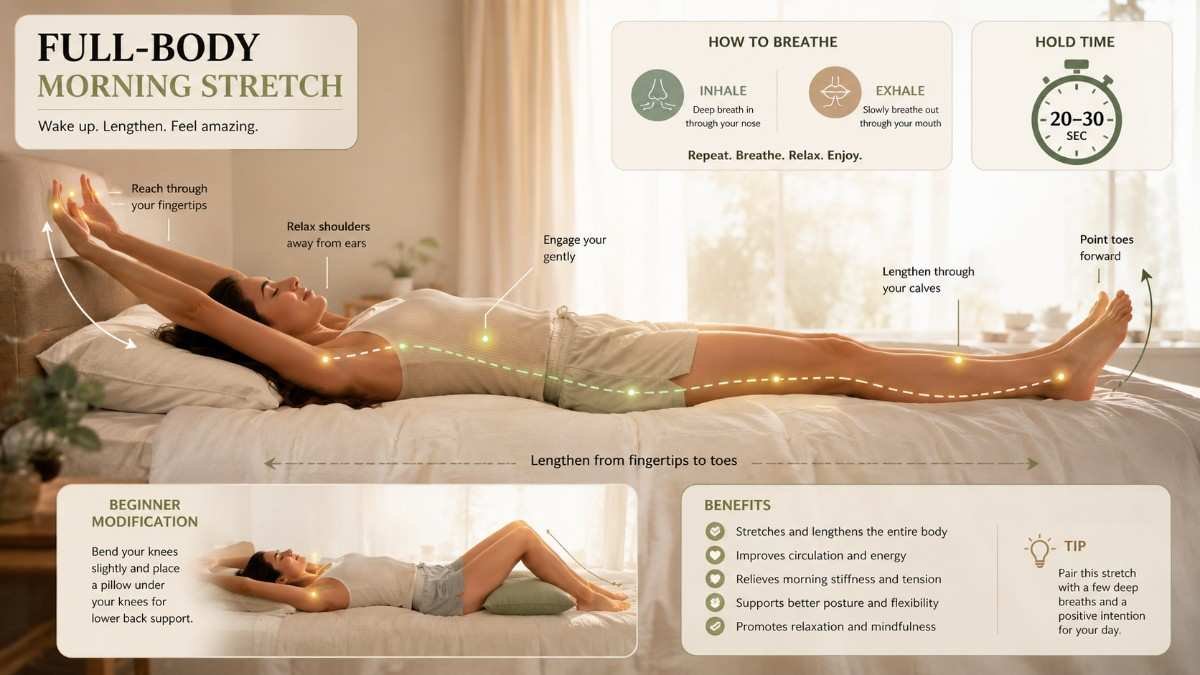
Lie flat on your back, extend your arms overhead, and point your toes. Reach long as if you are gently lengthening your whole body from both ends.
Hold for 20 to 30 seconds while taking slow breaths. This full-body reach wakes up sleepy limbs, lengthens the spine, opens the shoulders, and gives your calves, ribs, and core a soft morning signal.
Keep your lower back comfortable. If it arches too much, bend your knees slightly or place a pillow under them. The goal is to feel taller, looser, and more awake.
2. Knees-To-Chest
Bring both knees toward your chest and wrap your hands around your shins or behind your thighs. Let your shoulders relax, soften your jaw, and allow your lower back to settle into the mattress.
Hold for 20 to 30 seconds. This cozy stretch helps release your lower back, glutes, and hips, especially if you slept curled up, stayed in one position too long, or woke up feeling compressed around the waist.
For extra comfort, rock gently side to side. If hugging both knees feels intense, pull in one knee at a time and switch sides.
3. Spinal Twist
Keep your shoulders flat on the bed, bend both knees, and drop them slowly to the right. Turn your gaze over your left shoulder if your neck feels happy there, then breathe into your ribs and waist.
Hold for about 15 to 20 seconds, then switch sides. This gentle spinal twist supports mobility through the lower back, hips, and mid-back, which often feel tight after hours of sleep.
Avoid forcing your knees to touch the mattress. Let gravity do the work, and use a pillow between your knees if your hips feel sensitive. This stretch should feel like slow unwinding.
4. Figure-Four
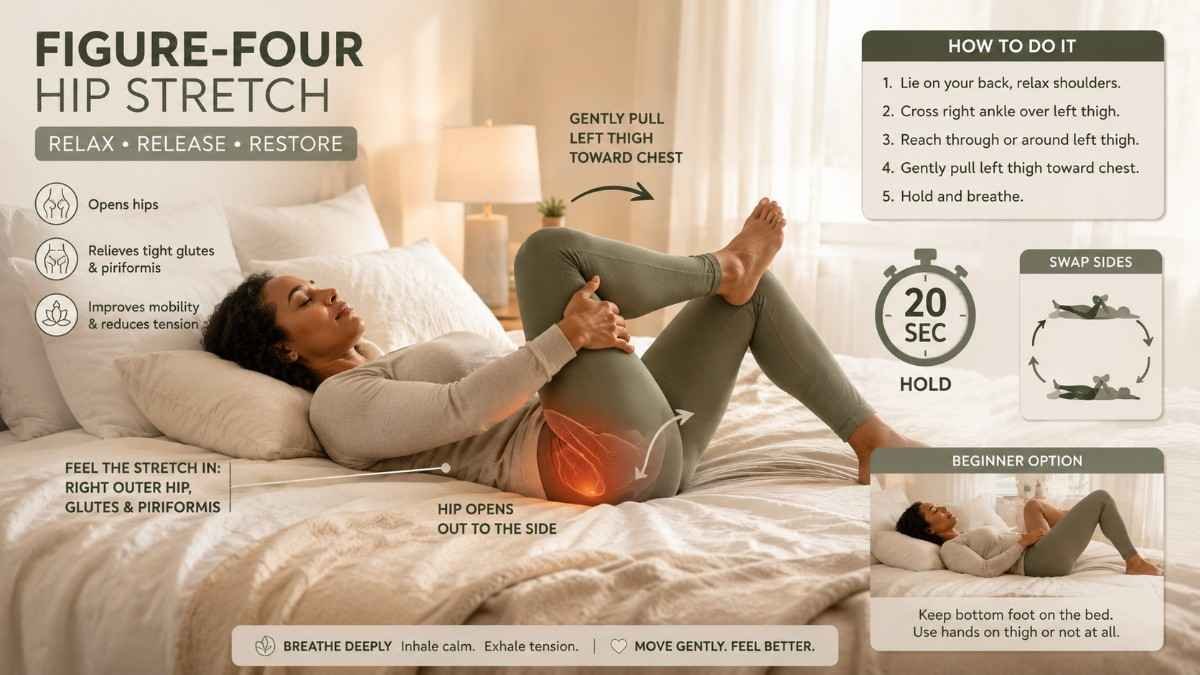
Cross your right ankle over your left thigh, making a relaxed number-four shape. Reach through or around your left thigh and gently pull it toward your chest until you feel your right hip open.
Hold for 20 seconds, then swap sides. This figure-four stretch targets the outer hips, glutes, and piriformis area, which can become tight from sitting, driving, walking, or side sleeping.
Keep your head and shoulders relaxed on the pillow. If the stretch feels too strong, keep the bottom foot on the mattress instead of pulling the thigh closer. A mild hip stretch is enough.
5. Seated Reach
Sit up slowly and swing your legs over the side of the bed. Interlock your fingers overhead and lean slowly to the left, then to the right, stretching through your side body.
Move with your breath for 20 to 30 seconds. This seated reach opens the ribs, waist, shoulders, and upper back while helping you transition from lying down to sitting upright.
Keep both hips grounded on the mattress. Avoid collapsing forward or shrugging your shoulders. Imagine your upper body getting longer before it bends, so the stretch feels spacious, not cramped.
Make It Work Daily
A good morning routine should fit your life, not compete with it. On busy days, do one round of each stretch. On slower mornings, repeat the sequence twice or hold stretches longer.
Try pairing your bed stretches with a habit you already have. Stretch before checking your phone, before opening the curtains, or after your alarm. Habit stacking makes consistency feel easier.
You can also adjust the mood. Soft light, a glass of water nearby, calming music, or a few deep breaths can turn five minutes into a peaceful ritual. Small lifestyle cues help your brain treat the routine as care.
Form Tips And Safety
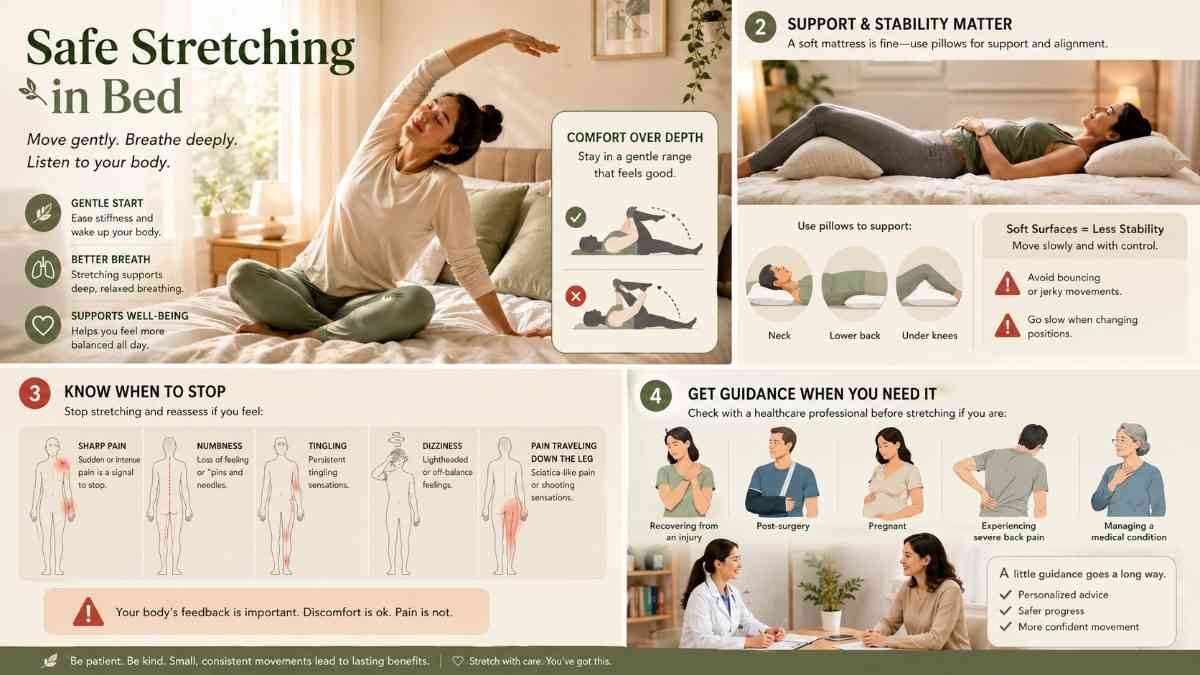
Comfort matters more than depth. Stretching in bed should feel gentle, warm, and controlled. If you feel sharp pain, numbness, tingling, dizziness, or pain traveling down your leg, stop and speak with a qualified healthcare professional.
A soft mattress may make positions less stable. Keep movements smaller, use pillows for support, and avoid forcing your back into deep curves. If a move feels awkward, skip it or try it later on a firmer surface.
People recovering from injury, surgery, severe back pain, pregnancy, or medical conditions should get personal guidance before starting. Your body’s story deserves individual care.
Best For Busy Lifestyles
This routine works beautifully for beginners because it is short, quiet, low-pressure and helps clear your mind. You can do it before a commute, work calls, or a workout. It gives your body attention before everyone else gets yours.
Desk workers may love the hip and side-body stretches most, while restless sleepers may like knees-to-chest and spinal twist. If mornings usually feel stiff, these small movements can create a smoother first step.
Older adults can keep the routine extra gentle and sit at the edge of the bed for a moment before standing. That pause helps the body adjust and makes the day steadier.
Frequently Asked Questions
1. Is A Morning Stretch Routine In Bed Good For Beginners?
Yes, a morning stretch routine in bed is beginner-friendly because it uses slow, low-impact movements. Start with light stretches, breathe steadily, and keep every position comfortable instead of chasing flexibility.
2. How Long Should I Hold Each Bed Stretch?
Most people can hold each stretch for 15 to 30 seconds. Choose the shorter end if you feel stiff, tired, or new to stretching, then build gradually.
3. Can This Help Morning Back Stiffness?
Gentle stretches may ease mild morning back stiffness by improving movement through your spine, hips, and glutes. For severe, ongoing, sharp, or radiating pain, get professional medical advice.
4. Should I Stretch Before Or After Getting Out Of Bed?
You can do both, but stretching before standing helps your body wake gradually. A morning stretch routine in bed is especially useful when you feel stiff right away.
Roll Out Smiling
A morning stretch routine in bed is a tiny habit that feels almost too simple to matter until you notice the difference. With a full-body reach, knees-to-chest, spinal twist, figure-four, and seated reach, you can wake your muscles, ease arthritis stiffness, and begin the day feeling softer, steadier, and more ready.