
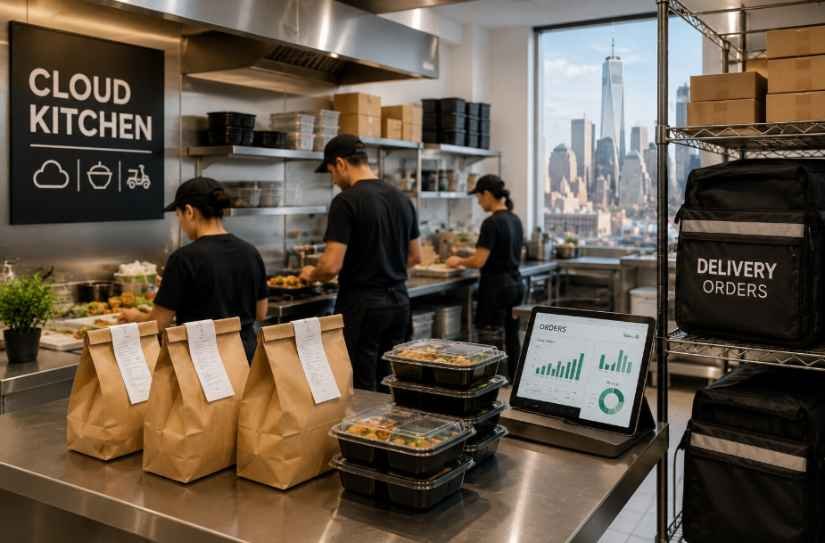
The food delivery market has changed how restaurant businesses are built. A few years ago, opening a restaurant often meant signing an expensive lease, investing heavily in interiors, and hoping enough customers walked through the door.
Today, cloud kitchens have created a different path. Entrepreneurs can launch food brands with lower overhead while reaching customers through delivery platforms and direct online ordering.
What makes a cloud kitchen especially attractive is its potential for growth. However, launching a cloud kitchen and building one that scales are two different challenges.
Many operators focus on getting their first orders but fail to create systems that support expansion. If long-term growth is the goal, every decision should be made with scalability in mind from day one.
Start With A Business Model Designed For Growth
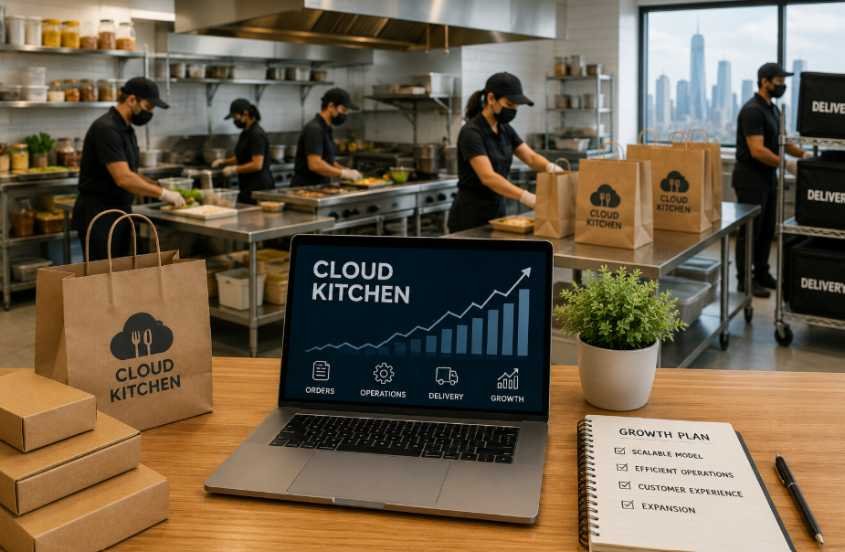
The business model you choose will determine how easily your cloud kitchen can expand in the future.
A single-brand cloud kitchen is often the simplest option for beginners. It allows you to focus on one cuisine and establish operational consistency. While easier to manage initially, customer acquisition costs can become expensive when all revenue depends on one brand.
A more scalable option is the multi-brand model. Instead of operating a single food concept, you can run several virtual restaurant brands from the same kitchen.
For example, one kitchen can produce burgers, wings, and desserts under separate brand names while sharing staff, equipment, and ingredients. This approach improves kitchen utilization and increases revenue potential without requiring additional real estate.
Shared commercial kitchens also provide a cost-effective way to start. These facilities reduce upfront investment and allow entrepreneurs to test demand before committing to larger operations.
Choose Location Based On Delivery Demand
Unlike traditional restaurants, a cloud kitchen does not need a prime storefront location. Visibility comes from food delivery apps, not foot traffic.
A smaller commercial space near dense residential communities, office districts, or mixed-use neighborhoods often delivers better economics than expensive retail locations. The goal is to shorten delivery times while keeping rental costs manageable.
Before signing a lease, study local demand patterns, delivery coverage areas, and competitor density. A data-driven location strategy helps create a stronger foundation for future expansion.
Build A Delivery-Friendly Menu

One of the biggest mistakes cloud kitchen startups make is creating menus that look great inside the kitchen but perform poorly during delivery.
Food must maintain quality after spending time in transit. Temperature, texture, and presentation should remain consistent even after a 30-minute delivery window. Items that become soggy, separate easily, or lose their visual appeal often generate customer complaints.
Instead of launching with dozens of menu options, focus on a smaller selection of high-margin products.
A menu with 8 to 10 carefully chosen items can often outperform a larger menu because it simplifies operations and reduces waste.
A scalable menu should:
- Use overlapping ingredients across multiple dishes
- Maintain quality during delivery
- Deliver strong profit margins
- Require minimal preparation complexity
This approach improves kitchen workflow while supporting future growth.
Master Unit Economics Early
Many cloud kitchen businesses generate revenue but struggle with profitability because they do not fully understand their numbers.
Every menu item should have a clear cost structure. This includes ingredients, packaging, labor, delivery commissions, and marketing expenses. Successful operators track costs down to the smallest details and regularly review margins.
Food costs should remain controlled, packaging should support both branding and efficiency, and platform commissions must be factored into pricing decisions.
When evaluating profitability, focus on operational efficiency rather than sales volume alone. A business that understands its margins can scale with greater confidence.
Create A Technology Stack That Supports Expansion
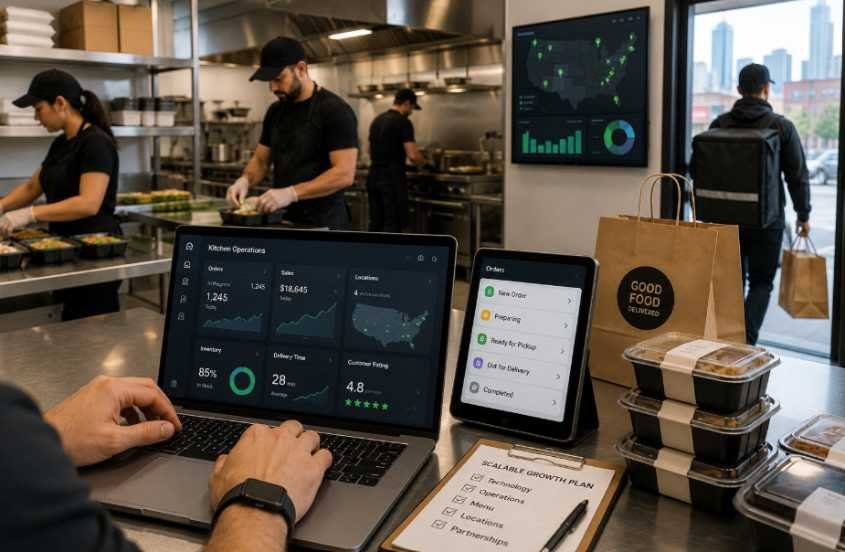
A scalable cloud kitchen functions like a technology-enabled operation rather than a traditional restaurant.
Orders often arrive from multiple channels, including food delivery apps, websites, and direct ordering systems. Without centralized management, operations quickly become difficult to control.
A strong technology stack typically includes:
- Unified order management software
- Point-of-sale systems
- Kitchen Display Systems (KDS)
- Inventory management tools
- Real-time reporting dashboards
Digital kitchen workflows reduce errors, improve preparation speed, and help maintain consistency as order volume increases.
As the business grows, technology becomes one of the most valuable investments for maintaining operational efficiency.
Build A Customer Acquisition Strategy Beyond Delivery Apps
Food delivery platforms provide immediate access to customers, making them valuable during the early stages of growth. High-quality food photography, optimized listings, and positive reviews can significantly improve visibility.
Cloud kitchen owners can also look out for influencer business strategies to understand how creator partnerships, local food promotions, and social proof can help attract more delivery customers.
However, long-term success requires reducing dependency on third-party platforms.
However, long-term success requires reducing dependency on third-party platforms.
Encourage repeat customers to order directly through your website or online ordering system. Packaging inserts, loyalty rewards, QR codes, and exclusive offers can help move customers toward direct channels.
This is also where many entrepreneurs discover similarities with one person business models. Businesses that own their customer relationships often achieve stronger margins and greater control than those that rely entirely on third-party platforms.
Building a direct customer base creates a more sustainable path to profitability and future expansion.
Create A Roadmap For Scaling
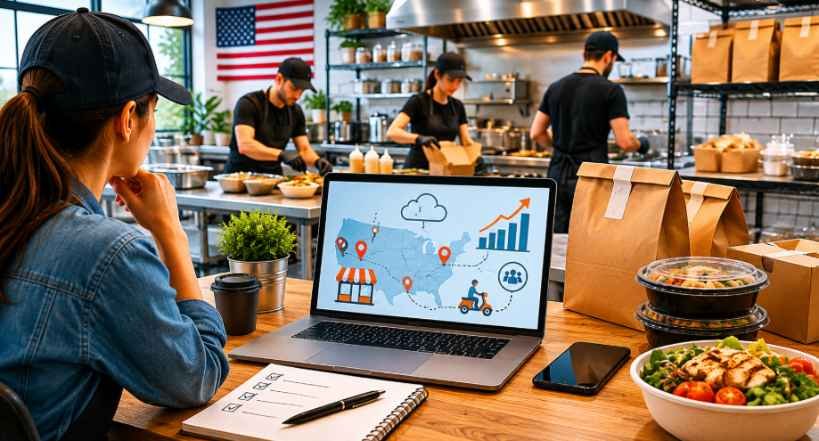
Many operators think scaling means opening additional kitchens immediately. In reality, growth should happen in stages.
The first goal is operational stability. Once systems, staffing, and profitability become predictable, expansion opportunities become easier to evaluate.
A practical scaling roadmap often looks like this:
- Launch one cloud kitchen location
- Optimize operations and profitability
- Add additional virtual brands
- Expand delivery coverage
- Open satellite kitchens in high-demand areas
- Develop a centralized production model
One of the most effective expansion strategies is the hub-and-spoke model. Under this structure, a central production facility prepares sauces, doughs, and other core ingredients in bulk. Smaller satellite kitchens then assemble and dispatch orders locally.
This model improves consistency, reduces labor requirements, and supports growth across multiple markets without duplicating every operational expense.
Why Systems Matter More Than Growth Speed
Rapid expansion often sounds appealing, but scaling too quickly can create operational problems.
The strongest cloud kitchen businesses focus on repeatable systems before opening additional locations. Standardized recipes, inventory controls, staff training procedures, and technology integrations make growth more predictable.
A business that can consistently deliver quality at one location has a much better chance of succeeding across multiple locations.
FAQs
1. How much does it cost to start a cloud kitchen business?
Startup costs vary depending on location, kitchen setup, equipment, and licensing requirements. Shared commercial kitchens typically require less upfront investment than building a dedicated facility.
2. Is a cloud kitchen more profitable than a traditional restaurant?
Cloud kitchens often benefit from lower overhead because they eliminate dining room expenses. Profitability depends on menu pricing, delivery costs, operational efficiency, and customer retention.
3. What is the best cloud kitchen model for scaling?
The multi-brand model is generally considered the most scalable because it allows multiple virtual restaurant concepts to operate from the same kitchen infrastructure.
4. Can a cloud kitchen operate without food delivery apps?
Yes. While delivery apps help acquire customers initially, many successful cloud kitchens eventually generate a significant portion of orders through direct websites, mobile ordering systems, and loyalty programs.
Final Thoughts
Starting a cloud kitchen business is relatively accessible compared to launching a traditional restaurant, but building one that scales requires a different mindset. The most successful operators think beyond opening day.
They focus on efficient menus, standardized processes, technology integration, and customer retention from the beginning. When every operational decision supports future growth, scaling becomes a natural progression rather than a risky leap.
The goal is not simply to launch a kitchen. The goal is to build a system that can grow, adapt, and remain profitable as demand increases.