
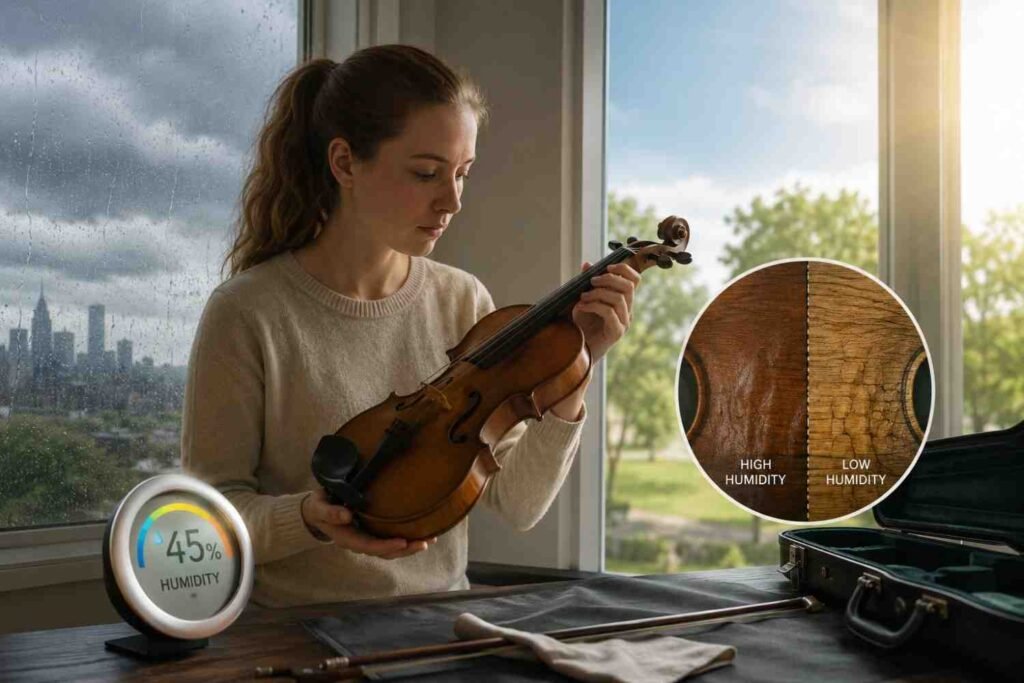
Wood never gets to rest until it has been polished, shaped, varnished, and put into a violin. The spruce wood on the top and the maple on the back continue to breathe along with the surrounding air all their lives. With changes in seasons or weather conditions in a room, from cold winter to humid summer, the violin responds faster than any person present there could possibly realise.
Why Wood Keeps Reacting Long After the Workshop
A violin is made of thin slices of carefully crafted wooden pieces that have been put together more by using glue and tension rather than screws or nails. Students studying how to take care of their instruments via Antonio Strad Violin or any specialised web resource find that such construction is exactly what makes violins extremely responsive to changes in humidity and temperature. Another characteristic property of the violin that is influenced by changes in the climate is its sound quality.
- Low humidity results in drying up of the wood and hence its contraction
- High humidity leads to absorption of water by the wood and hence its expansion
- Rapid alternation leads to strain on joints and seams
- Older instruments, having been through decades of seasons, often show these changes more visibly than newer ones
Warning Signs Worth Watching For
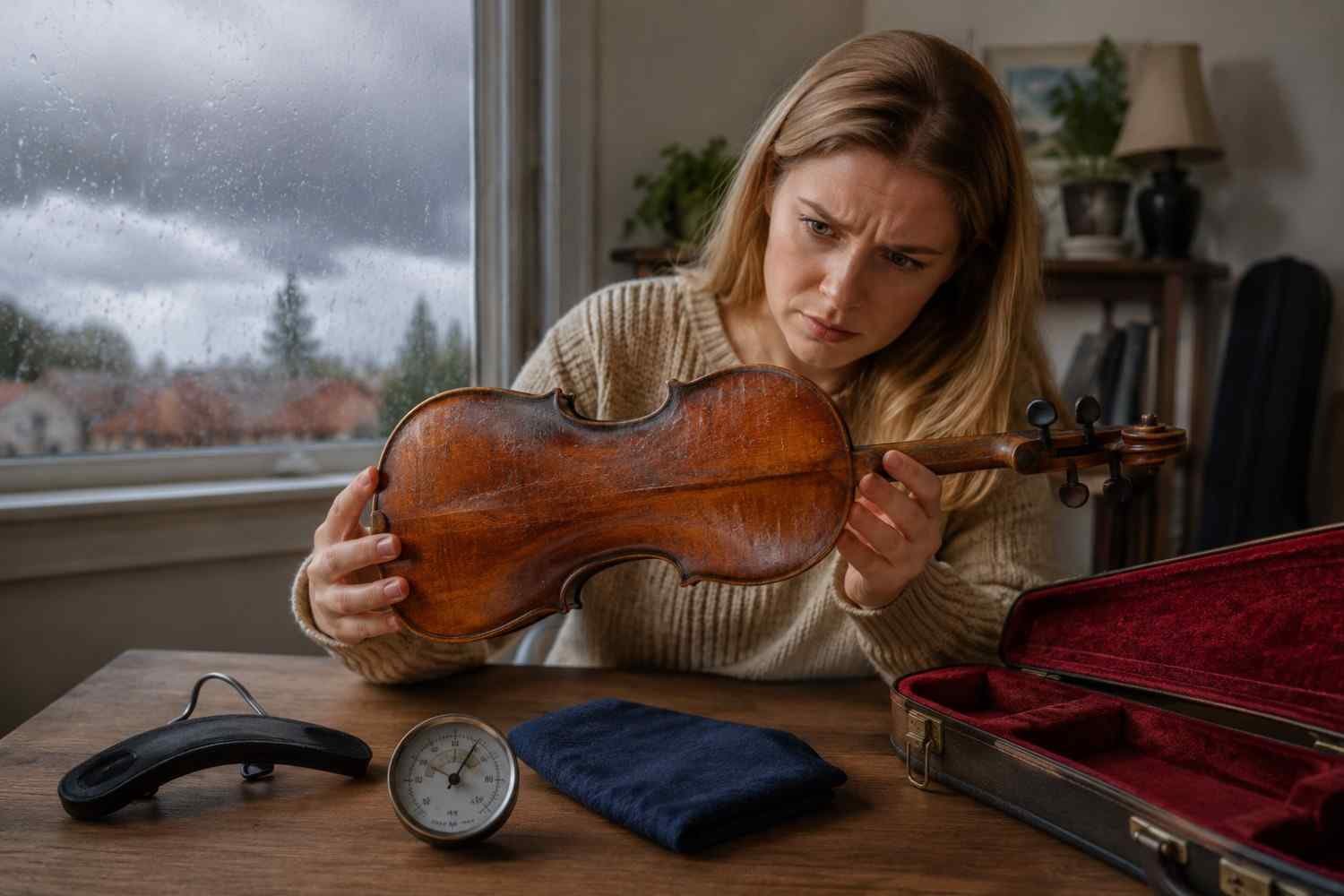
Musicians and teachers often notice a shift in tone or playability before they notice anything visually wrong with the instrument. Common signs include:
- Seams along the ribs or top opening slightly, sometimes with a faint buzzing sound
- Pegs turning too easily in humid weather or sticking stubbornly in dry conditions
- Fine cracks appearing near the tailpiece, chinrest, or top plate
- A noticeably duller or thinner tone during extreme weather stretches
- Strings slipping out of tune far more often than usual
None of the above-mentioned issues necessarily indicates that your instrument is ruined. In most cases, they are easily reversible when the levels of humidity become stable again; only open seams and cracks require professional attention.
The Case Plays a Bigger Role Than Expected
Humidity affects the violin even before getting into it because the humidity has passed through the violin’s case, making the importance of the violin case almost as significant as that of the violin inside. Humid conditions should be avoided by the case, allowing the wood more time to adapt.
- Wood or foam-core cases have more insulation than lighter-weight shells
- A tight fit in the interior of the case decreases the amount of air pocket that is affected by fast changes in temperature
- Older cases with small vents or openings let dry or wet air in quicker than anticipated
- Cases left in closets or corners, away from outside walls, are less likely to fluctuate in temperature
Orchestra members and travelling musicians view the case as a small climate-controlled environment rather than just something to carry the instrument around, one of the reasons why high-quality cases come with hygrometers.
Finding a Stable Range
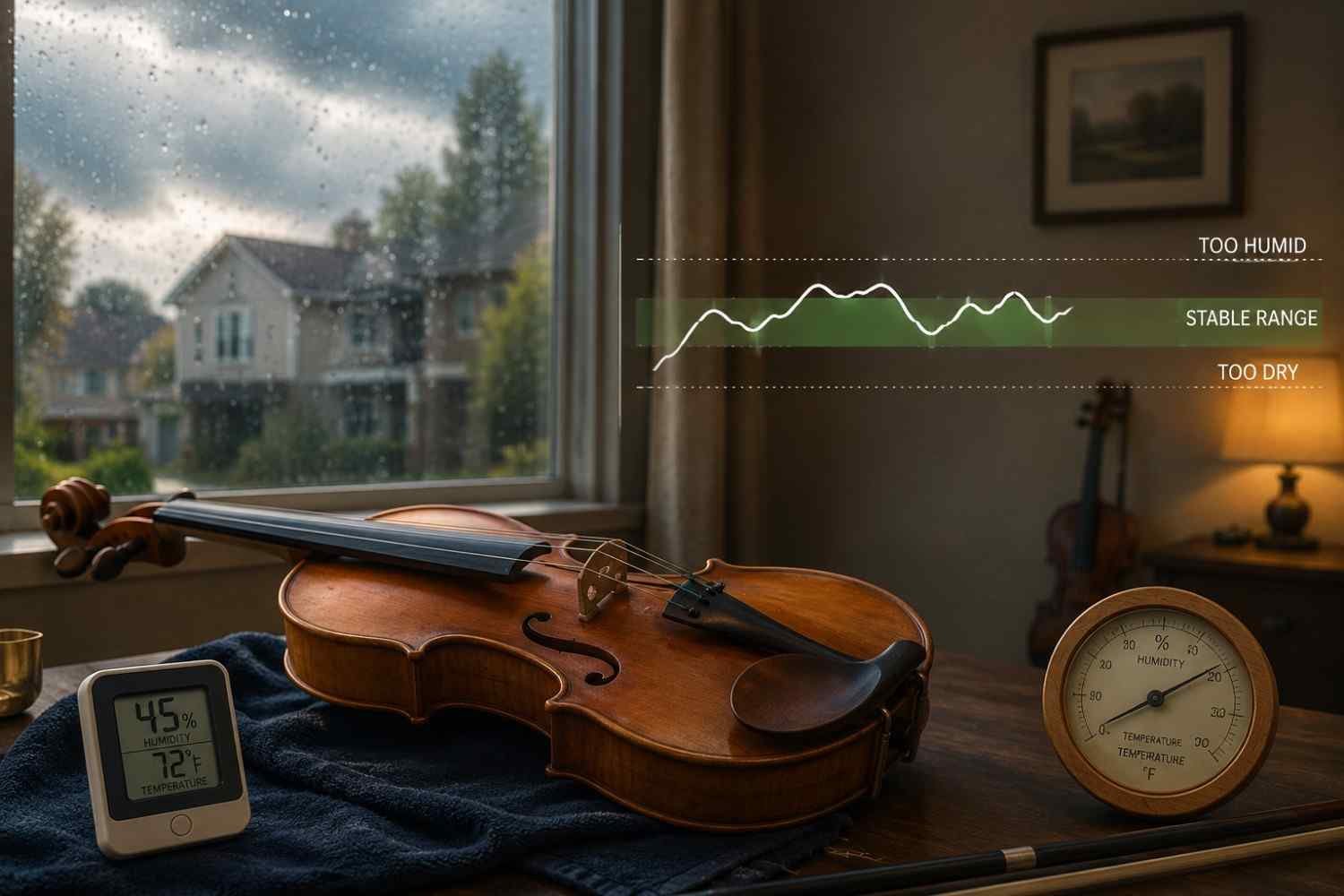
It seems most violin specialists agree that a humidity level of around 40-60% is comfortable for the instrument while keeping the temperature as constant as possible. Reaching that range does not require an elaborate setup:
- A small case humidifier during dry winter months
- A simple hygrometer to track conditions rather than guess at them
- Storing the instrument far from any radiators, heating vents, and sunlight exposure
- Storing the instrument away from cars and any closed spaces in extremely hot or freezing weather conditions
Families researching a first instrument sometimes compare setup advice and case options through established resources before settling on a purchase. Developing consistent care habits, much like learning how to improve focus while studying, helps build routines that protect the instrument over the long term.
Weather on the Move
Travelling with an instrument brings its own humidity challenges, since a violin might go from a heated concert hall to a freezing car within minutes. A few travel habits reduce the risk considerably:
- Letting the instrument adjust gradually inside its case rather than opening it immediately after a temperature change
- Carrying a compact humidity pack on long trips
- Keeping instruments away from air conditioning vents or car heaters
- Scheduling a check-up with a luthier after any particularly harsh season
A Long-Term Relationship With the Weather

Regardless of whether a violin is a student grade or an old instrument, it will always have to adapt to the surrounding environment in which it is being used during its entire lifetime. Humidity control does not mean striving for perfection, but rather trying to avoid situations that would cause some serious harm. People playing the instrument, including parents and teachers, who are accustomed to certain small-scale humidity controls, usually spend less on repairs and more on playing.
When one compares various accessories for humidity control or just seeks advice regarding instrument care, it is important to consider climatic conditions and daily routine.