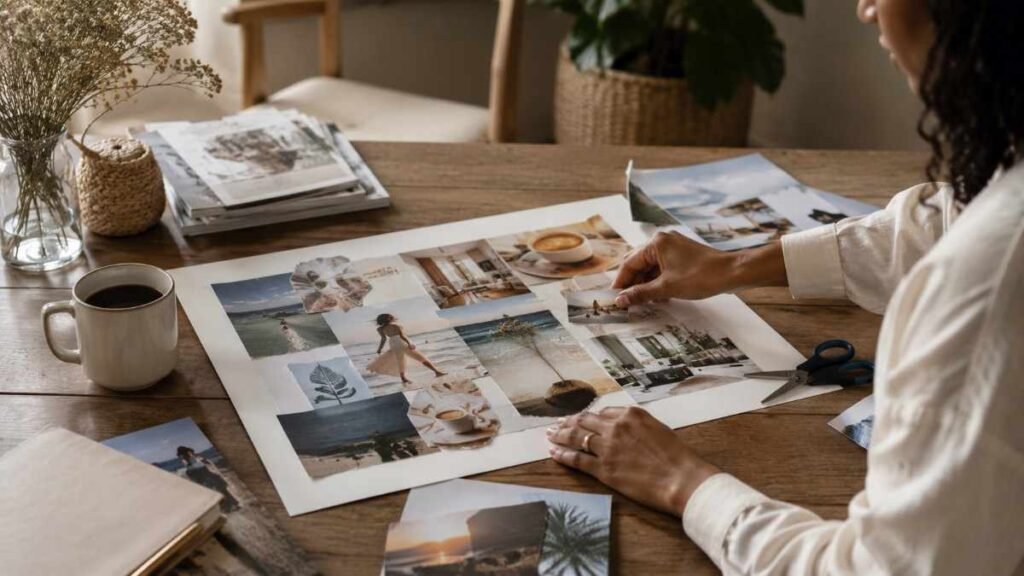
A cozy evening, a few inspiring images, and one honest look at your goals can become more than a pretty collage. Learning how to create a vision board helps you see the lifestyle you want, choose what matters most, and build small daily habits around it.
Key Takeaways
- Clarify your goals first.
- Choose a physical or digital format.
- Use images that feel personal.
- Add simple action cues.
- Place your board where you will see it daily.
What Is a Vision Board?
A vision board is a visual goal-setting tool that uses images, words, colors, affirmations, and symbols to represent the life you want to create. It can reflect career dreams, wellness goals, relationships, finances, home, travel, self-care, and personal growth.
Think of it as a lifestyle map. Instead of keeping every dream in your head, you give each one a place you can see. That daily reminder helps your mind notice choices and habits that support your bigger vision.
A good vision board is not about perfection or copying someone else’s aesthetic. It should feel like your life, your values, and your next chapter. The strongest boards are honest, specific, and tied to real action. Keep it supportive, not stressful, so it becomes a place you want to return often.
Clarify Your Goals
Before you gather images, get clear on what you actually want. Ask whether the board is for the whole year, a new season, a career milestone, or personal growth.
Write down your top goals in simple lifestyle categories. You might include career, finances, health, relationships, home, creativity, travel, confidence, spirituality, or self-care. Keep the list focused so your board feels calm.
Create a short intention statement to guide your choices. Something like, “This represents the career, home, and peaceful lifestyle I am building this year” can help you choose visuals with meaning instead of grabbing anything random.
Collect Images and Words

Look for visuals that make you feel inspired, grounded, excited, or brave. Choose images that represent your desired future, not images that make you feel behind.
For a physical board, cut photos, quotes, textures, and keywords from magazines, catalogs, old calendars, or printed images. Add handwritten notes, stickers, postcards, fabric scraps, or small keepsakes if they hold meaning.
For a digital vision board, collect images from Pinterest, Canva, stock photo sites, or your camera roll. Use words like “ease,” “strength,” “abundance,” “creative income,” “deep rest,” or “healthy love” to give your board emotional direction.
Arrange Your Board
Once you have visuals, arrange them in a way your brain can process easily. A cluttered board may look creative, but it can feel overwhelming if every inch is packed. Leave white space so your goals can breathe.
You can divide the board into sections by category, such as health, money, career, relationships, home, and self-care. Another option is placing one central theme in the middle, then building around it like a mind map.
Group images by how you want to feel. Peaceful images can sit together. Career visuals can have their own corner. Romantic, social, or family goals can share another area. The layout should make sense quickly.
Build Your Board
Now bring everything together. For a physical vision board, use poster board, corkboard, cardstock, canvas, or a journal page. Glue, tape, or pin your images down, then add markers, stickers, borders, or labels.
For a digital board, use Canva, Adobe Express, Pinterest collages, or a simple photo editor. Choose a template or blank canvas, upload your images, arrange them neatly, and export the design for your phone, laptop, tablet, or printer.
Beside a travel image, write “save monthly.” Near a wellness image, write “walk daily.” Next to a career photo, write “pitch weekly.” Tiny prompts turn inspiration into movement.
Display and Engage
The true power of a vision board comes from seeing it often. A board tucked in a drawer becomes a forgotten craft project. Place a physical board somewhere visible, such as your bedroom, office, closet door, vanity, or reading corner.
For a digital board, set it as your phone lock screen, desktop wallpaper, tablet background, or planner cover. The easier it is to see, the more naturally it becomes part of your routine.
Engage with it daily, even for thirty seconds. Look at one image and ask, “What is one small thing I can do today?” This habit keeps your goals active without feeling heavy.
Make It Work Daily
Knowing how to create a vision board is only the beginning. Pair every major dream with one habit, one boundary, or one next step you can repeat.
A calm home image might mean a ten-minute evening reset. A money goal might mean tracking spending every Friday. A strong body image might mean joyful movement. A creative career image might mean publishing one idea each week.
Review your board weekly or monthly. Notice what still feels true, what needs adjusting, and what you have already started living. It shows your goals are growing with you.
Vision Board Ideas

A lifestyle vision board can include every area that shapes your daily happiness. For wellness, add nourishing meals, walking shoes, sunlight, water, skincare, sleep reminders, meditation, therapy, or movement that feels joyful instead of punishing.
For home and personal style, include cozy rooms, organized shelves, colors you love, wardrobe inspiration, flowers, candles, art, or kitchen details. These images can reflect how you want your space and self-expression to feel.
For career, money, and creativity, include a dream desk, invoices, savings goals, books, courses, business ideas, client mood boards, or travel plans. Make each image specific enough to guide one next step.
Mistakes to Avoid
The biggest mistake is making your board too vague. Pretty images are lovely, but they need meaning. Ask what each image represents. Is it freedom, rest, confidence, stability, connection, adventure, creativity, or better health?
Another mistake is copying someone else’s dream life. Your board does not need to look beige, expensive, luxury-focused, or social-media perfect. It should feel personal, possible, and emotionally safe.
Do not forget follow-through. A vision board without action can become decoration. Choose one weekly step, celebrate small wins, and remove anything that feels disconnected from your values.
Frequently Asked Questions
1. How Do I Make My Own Vision Board?
To make your own board, clarify your goals, collect meaningful visuals, arrange them by category or feeling, build the collage, and display it where you will see it every day.
2. What Are Common Mistakes With Vision Boards?
Common mistakes include choosing vague images, copying someone else’s lifestyle, overcrowding the layout, hiding the board away, and forgetting to connect each goal with realistic action.
3. What Should a Vision Board Consist Of?
A vision board should consist of personal images, keywords, affirmations, quotes, symbols, colors, goals, and action cues that reflect your desired lifestyle and future self.
4. What Are the 4 Categories Of a Vision Board?
The four common categories are personal growth, relationships, career or money, and health or lifestyle. You can rename them to match your season and priorities.
Your Dream Life, But Make It Real
How to create a vision board is really about turning your inner hopes into visible, doable reminders. Make it beautiful, but make it honest too. Choose images that reflect your real values, pair them with small habits, and let your board become a friendly daily nudge toward the lifestyle you are ready to build.