
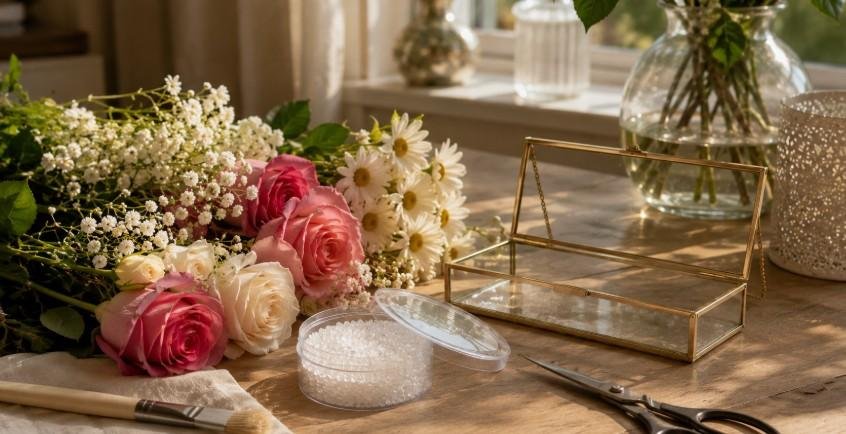
A bouquet can bring back a whole day, which is why preserving flowers with silica gel feels so worth learning. I use this method when I want blooms to stay full, colorful, and display-ready after weddings, birthdays, or surprises.
Key Takeaways
- Silica gel keeps flowers shaped and bright.
- Fresh dry blooms give the cleanest finish.
- Most flowers dry within two to seven days.
- The gel is reusable after proper oven recharging.
- Low light and low humidity extend display life.
Use This Flower-Saving Method To Save Memories
Preserving flowers with silica gel matters because it turns short-lived blooms into meaningful decor, keepsakes, and gifts. Silica gel absorbs moisture while helping petals keep their natural shape and color, so flowers look more lifelike than air-dried or pressed blooms. The process takes two to seven days, and the gel is reusable.
This makes the method practical. You can save wedding bouquet flowers, memorial roses, prom corsages, anniversary blooms, baby shower arrangements, or garden favorites without professional equipment.
It also fits lifestyle projects. Dried flowers can become shadow box art, resin trays, framed keepsakes, glass displays, ornaments, wreaths, or shelf accents.
Materials Needed For Silica Gel Flowers
You can try this when you’re alone looking to have fun. Before you start, gather everything in one place. Fresh blooms are fragile, and the faster you begin, the better your color and petal shape will look.
Flower Drying Silica Gel
Use flower drying silica gel made for crafts instead of packet gel. Craft silica gel is easier to pour around petals and is available at Michaels or online through Amazon.
Color-indicating silica gel helps because it changes color as it absorbs moisture. That cue tells you when crystals need recharging before the next batch.
Airtight Craft Container
Choose a plastic tub with a tight lid. Once used for silica gel, keep it for crafting and never reuse it for food. The container should be deep enough for blooms. Flowers need space between each other and the edges.
Helpful Tools And Safety Gear
Scissors trim stems, while floral wire can reinforce blooms or reattach flower heads to artificial stems. A soft bristle brush removes silica dust from petals.
Wear gloves and a mask if gel is dusty. Good safety habits keep the project comfortable.
Step-By-Step Drying Process
This is the main process for preserving flowers with silica gel, and it works for roses, daisies, carnations, baby’s breath, zinnias, hydrangeas, and bouquet flowers. Move slowly.
Prepare The Flowers
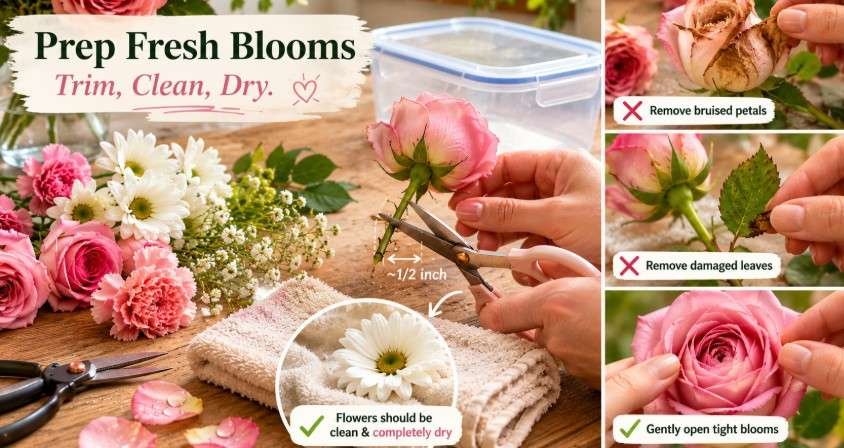
Trim the stems so only about a half inch or less remains on each flower head. Remove bruised petals, damaged leaves, and brown or limp pieces.
For larger tight blooms, such as roses, gently open the petals so the gel can work inside. Make sure the flowers are dry before they enter the container.
Pour A Base Layer
Add a one to one and a half inch layer of silica gel crystals to the bottom of your airtight container. This base supports the flower from underneath.
Smooth the surface with your fingers or a spoon. A level base helps the bloom sit naturally instead of leaning into an odd shape.
Place The Blooms
Lay flowers face up, or place longer blooms on their sides if that protects their shape better. Make sure flowers do not touch each other or the container walls.
Crowding can bend petals and cause uneven drying. Leave breathing room so the silica gel can surround every bloom completely.
Bury The Flowers
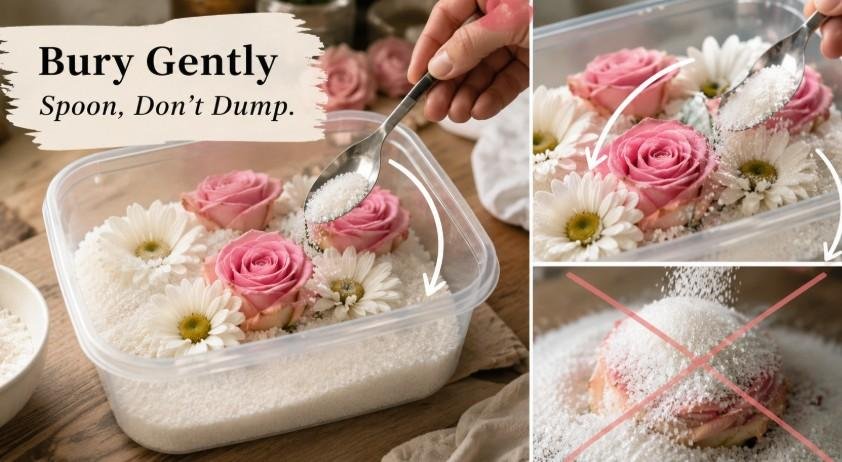
Slowly pour silica gel around the outside of each flower first, then over the center and between petals. Do not dump crystals quickly because the weight can flatten the bloom.
Use a spoon and let crystals fall like soft sand. The goal is to support every petal while moisture is pulled away.
Seal And Wait
Secure the lid tightly and place the container in a cool, dry spot away from direct sun. Most flowers take three to seven days to dry completely.
Small flowers may finish in two or three days, while thick roses, peonies, dahlias, or hydrangeas may need up to a week. If petals feel soft, reseal and wait.
Reveal The Blooms
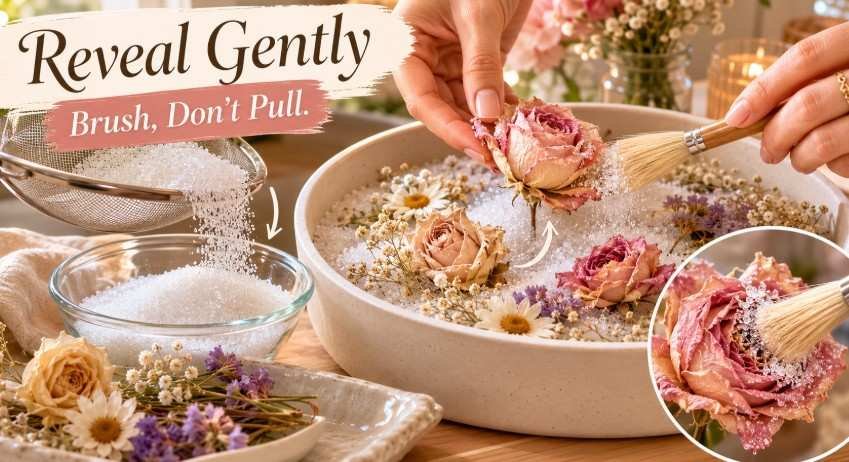
Carefully pour the silica gel into a sifter or over a basin to uncover your dried flowers. Move slowly so fragile petals do not snap.
Lift each flower from underneath, then use a soft brush to sweep away remaining crystals. This reveal is when your preserved keepsake starts to feel real.
Pro Tips And Recharging
Good results come from patient drying, gentle finishing, and smart storage. These details help dried flowers look polished instead of brittle or dusty.
Recharge The Gel
Silica gel absorbs moisture over time, so it needs recharging before reuse. If your color-indicating crystals turn from orange to green or dark, they are full.
Spread used gel on a baking sheet and bake it at 250°F to 400°F for four to five hours, or until crystals return to their original color. Let it cool before storing.
Add Finishing Touches
Once flowers are dry, you can reattach them to artificial stems using floral wire. This helps with vase arrangements, wreaths, and bouquet-style displays.
A light coat of surface sealer or hairspray can make dried flowers less brittle, but test it on one bloom first. Some sprays can darken pale petals.
Store And Style Wisely
Keep finished dried arrangements in low-humidity rooms and out of direct sunlight. Moisture softens preserved flowers, while harsh light fades color.
Covered displays work best for long-term beauty. Shadow boxes, glass domes, and frames protect petals from dust while letting the memory shine.
Common Mistakes To Avoid
Even a simple flower preservation project can go wrong if you rush. Most mistakes are easy to prevent once you know what causes them.
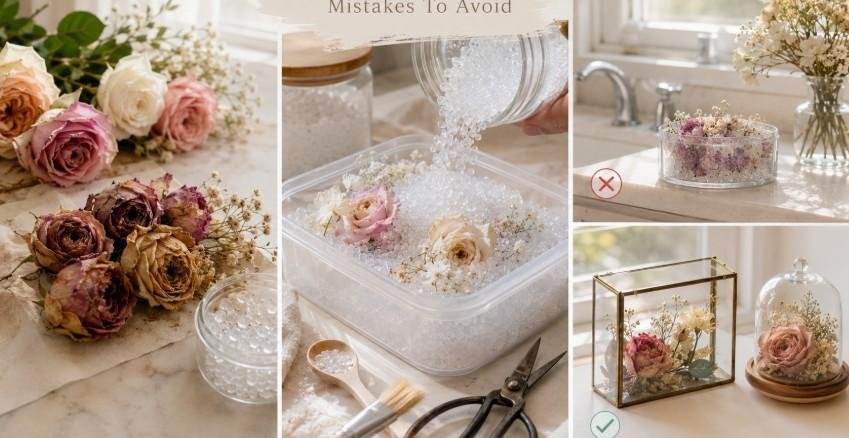
Using Tired Flowers
Flowers that are wilted, wet, bruised, or already browning will not preserve beautifully. Silica gel helps maintain shape and color, but it cannot reverse damage.
Start with fresh blooms as soon as possible. For wedding or event flowers, choose the best pieces before the arrangement sits in heat or direct sunlight.
Pouring Too Fast
Fast pouring is one of the biggest reasons petals flatten. Heavy gel dumped on top can crush delicate shapes in seconds.
Pour slowly around the flower first, then fill the center gently. A spoon gives you control and helps protect detailed blooms.
Displaying Them Carelessly
Preserved flowers last longer when treated like decor, not fresh flowers. Bathrooms, sunny windows, and humid kitchens are not ideal places for dried arrangements.
Choose dry shelves, covered frames, or decorative boxes. A soft brush or cool air from a distance can remove dust without damaging petals.
Frequently Asked Questions
1. How Long Do Silica Gel Preserved Flowers Last?
With proper storage, preserving flowers with silica gel can help blooms last one to three years or longer. Keep them dry, shaded, and protected from dust.
2. How To Preserve Fresh Flowers Permanently With Silica Gel?
Start with fresh dry blooms, bury them gently in silica gel, seal the container, and wait until fully dry. Display them in a protected frame, dome, or shadow box.
3. What Are Common Flower Preserving Mistakes?
Common mistakes include using wilted flowers, pouring gel too fast, removing blooms too early, skipping safety gear, and placing finished flowers in humid or sunny areas.
4. Does Putting Pennies In Flowers Make Them Last Longer?
Pennies are an old vase-water trick, not a real preservation method. They may affect bacteria slightly, but they cannot replace silica gel drying for long-term keepsakes.
Final Petal Party
Preserving flowers with silica gel is a sweet way to keep beautiful moments from your loved one close without clutter. With fresh blooms, an airtight container, patient drying, gentle brushing, and thoughtful storage, you can turn roses, bouquet flowers, or garden favorites into lifestyle keepsakes that feel romantic, personal, and easy to display.